Telogen Effluvium
(Excessive Hair Shedding)
When Hair Starts Falling Out More Than Usual
One of the scariest experiences someone can have is running their fingers through their hair and watching handfuls come out.
Maybe you've noticed more hair in the shower drain, covering your bathroom floor, or wrapped around your brush. Your ponytail suddenly feels smaller, yet you can't pinpoint exactly when it happened.
If this sounds familiar, you are not alone.
One of the most common reasons people experience sudden hair shedding is a condition called Telogen Effluvium. While the amount of hair coming out can be alarming, understanding what is happening is the first step toward supporting healthy hair growth again.
Unlike pattern hair loss, telogen effluvium is usually not caused by permanent damage to the hair follicle. Instead, it is often the body's response to a significant internal or external stressor that temporarily disrupts the normal hair growth cycle.
What Is Telogen Effluvium?
Telogen Effluvium (TE) is a form of diffuse hair shedding that occurs when an unusually large number of hair follicles shift prematurely from the active growth phase (anagen) into the resting phase (telogen).
Normally, only a small percentage of your hairs are in the resting phase at any given time. With telogen effluvium, that percentage increases significantly. Several weeks to several months later, those resting hairs begin to shed, often creating the impression that hair loss appeared suddenly.
Although the shedding can be dramatic, the follicles themselves usually remain healthy. In many cases, new hairs are already beginning to grow as older hairs are being shed.
Because the shedding often begins two to four months after the triggering event, many people never connect the hair loss to what actually caused it.
Understanding the Hair Growth Cycle
Every healthy hair follicle continuously cycles through three primary stages.
Anagen (Growth Phase)
This is the active growth stage where hair is continuously produced. Approximately 85–90% of scalp hairs are normally in this phase.
Catagen (Transition Phase)
This brief stage signals the end of active growth as the follicle prepares to rest.
Telogen (Resting Phase)
The follicle rests before releasing the hair. Normally, only about 10–15% of hairs are in this phase.
With telogen effluvium, many more follicles enter the telogen phase at the same time. As these resting hairs reach the end of their cycle, they shed together, creating noticeable hair loss across the scalp.
What Happens During Telogen Effluvium?
Think of your hair follicles as a large neighborhood.
Normally, only a few houses turn their lights off each night.
With telogen effluvium, hundreds of houses suddenly turn their lights off at the same time.
Several months later, all of those hairs begin shedding together.
This is why people often describe losing hair "all at once."
The important thing to remember is that the follicles are generally still alive. They're simply resetting before beginning another growth cycle.
Acute vs. Chronic Telogen Effluvium
Acute Telogen Effluvium
Acute TE typically lasts less than six months and is usually linked to a specific event or stressor.
Examples include:
• Illness
• High fever
• Surgery
• Childbirth
• Significant emotional stress
• Rapid weight loss
• Certain medications
• Major hormonal changes
Once the trigger has resolved, shedding often gradually improves.
Chronic Telogen Effluvium
Chronic TE continues for longer than six months and may occur without one obvious trigger.
Persistent inflammation, nutritional deficiencies, endocrine imbalances, chronic illness, ongoing stress, or multiple contributing factors may all play a role.
Because chronic shedding has many possible causes, a thorough assessment becomes especially important.
Common Symptoms
People with telogen effluvium often notice:
• Sudden increase in daily shedding
• Hair coming out while washing
• Hair covering the shower floor
• Hair on clothing and pillows
• Increased shedding during brushing
• Smaller ponytail
• Diffuse thinning across the scalp
• More visible scalp
• Hair feeling less full
• Increased anxiety about continued hair loss
Unlike some inflammatory scalp conditions, telogen effluvium usually does not cause itching, burning, redness, or significant scalp discomfort.
What Causes Telogen Effluvium?
Hair follicles are highly sensitive to changes occurring throughout the body.
Common triggers include:
• Significant emotional stress
• Illness
• High fever
• COVID-19 or other viral infections
• Surgery
• Rapid weight loss
• Nutritional deficiencies
• Iron deficiency
• Low protein intake
• Hormonal changes
• Pregnancy
• Menopause
• Thyroid disorders
• Certain medications
• Chronic inflammation
• Major life events
Sometimes several small stressors occur together, creating enough cumulative stress to trigger excessive shedding.
Risk Factors
Your risk of developing telogen effluvium may increase with:
• Recent illness
• Major surgery
• Significant psychological stress
• Restrictive dieting
• Nutritional deficiencies
• Hormonal fluctuations
• Autoimmune disease
• Chronic inflammatory conditions
• Certain prescription medications
• Recent childbirth
Because so many different factors can contribute to telogen effluvium, identifying the underlying cause is one of the most important parts of the evaluation.
How Is Telogen Effluvium Identified?
Excessive hair shedding can have many potential contributing factors, which is why it's important not to assume every case of shedding is simply telogen effluvium. Other hair loss conditions, nutritional deficiencies, hormonal changes, inflammatory scalp conditions, medications, and medical concerns can all produce similar symptoms.
The first step is understanding your story. During your Hair & Scalp Assessment, we'll discuss when the shedding began, whether it happened suddenly or gradually, recent illnesses, surgeries, medications, stress, dietary changes, hormone fluctuations, and any significant life events over the previous several months.
We also perform a detailed evaluation of your scalp and hair to identify whether your findings are consistent with telogen effluvium or whether there may be additional factors contributing to your hair changes. It is not uncommon for someone to experience telogen effluvium alongside another form of hair loss, making a comprehensive assessment especially valuable.
Personalized Support Options
Because telogen effluvium is usually a response to an underlying stressor rather than a problem with the hair follicle itself, support focuses on identifying potential contributing factors while creating the healthiest possible environment for normal hair growth.
Your personalized plan may include one or more of the following:
Comprehensive Hair & Scalp Assessment
Every client begins here. Before making recommendations, we take the time to understand your health history, hair history, lifestyle, and scalp health to develop a personalized plan.
Professional Scalp Care
A healthy scalp provides the foundation for healthy hair growth. Professional scalp treatments may be recommended to improve scalp condition, remove buildup, support the skin barrier, and promote an optimal environment for the hair follicle.
Low-Level Light Therapy (LED & Laser)
Low-Level Light Therapy may be recommended to support normal follicle activity and encourage healthy hair growth as part of a comprehensive hair restoration program.
TED Hair Restoration
For appropriate candidates, TED Hair Restoration may be incorporated into a personalized plan to support healthier hair and improve overall hair quality.
Nutritional Support
Hair is one of the first tissues to reflect changes occurring within the body. If nutritional factors appear to be contributing, recommendations may focus on supporting healthy levels of nutrients commonly associated with healthy hair growth, including:
• Protein
• Iron
• Vitamin D
• Vitamin B12
• Folate
• Zinc
• Essential fatty acids
Functional Bloodwork Recommendations
When appropriate, I may recommend discussing bloodwork with your physician to further evaluate nutritional, hormonal, metabolic, or inflammatory factors that could be contributing to your hair shedding.
Epigenetic Hair Analysis
Epigenetic testing may provide additional insight into nutritional priorities, environmental influences, and areas of support that can be incorporated into your personalized plan.
Home Hair & Scalp Care
Healthy hair is supported by healthy daily habits. Your home care recommendations may include scalp care, nutrition, lifestyle modifications, and therapies designed to support long-term hair and scalp health.
What We Look For During Your Hair & Scalp Evaluation
At Root Revival Hair Restoration, every journey begins with understanding why your hair is changing.
During your Hair & Scalp Assessment, I collect objective information to help identify potential factors that may be contributing to your excessive shedding. Depending on your individual needs, your assessment may include:
• Comprehensive health and hair history
• Family history
• Lifestyle and nutritional review
• Medication review
• Hair pull assessment
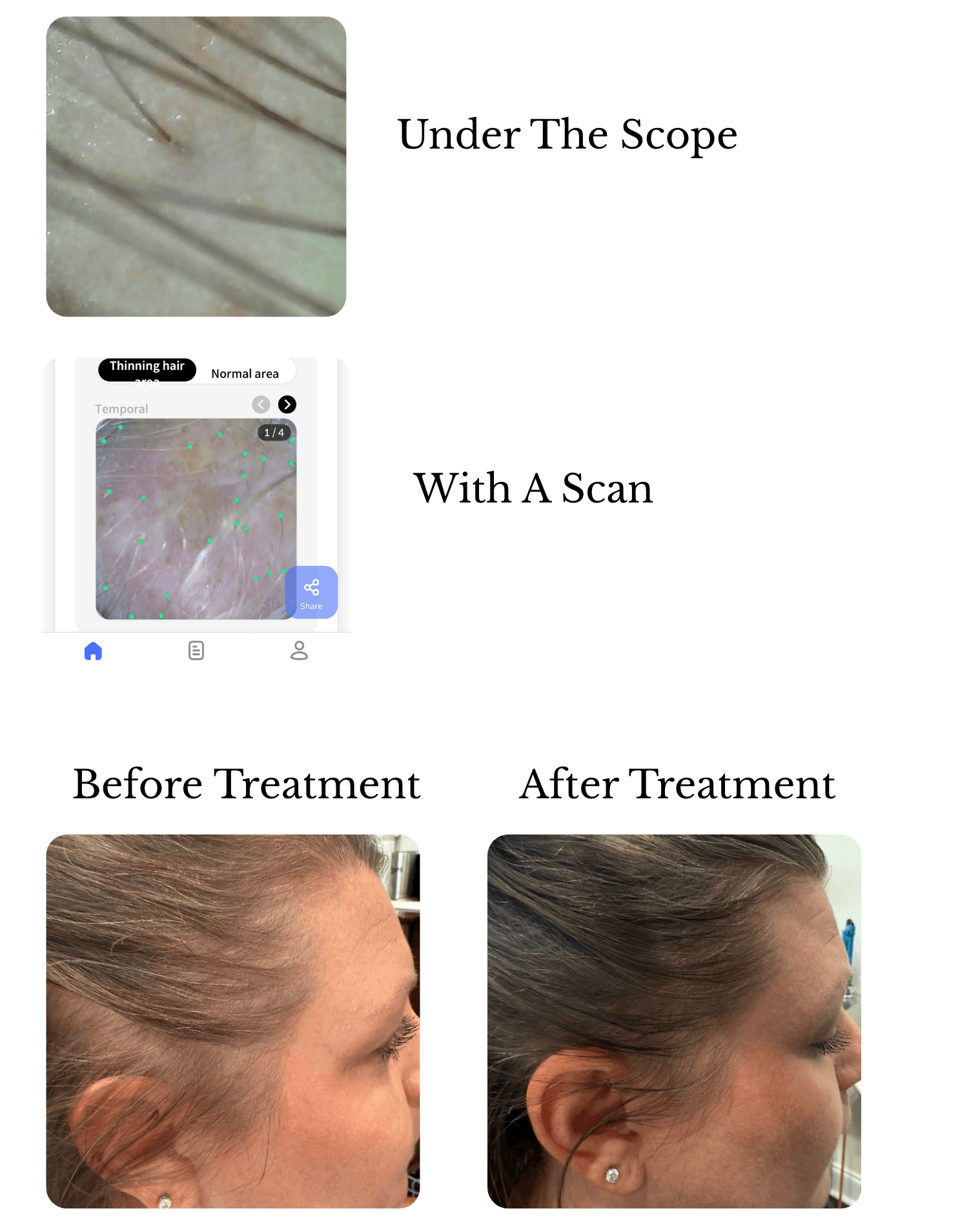
• High-resolution scalp photography
• Digital scalp imaging
• Trichoscopy
• Polarized Microscopy
• Hair density evaluation
• Hair shaft diameter
• Hair growth cycle assessment
• Hair bulb evaluation
• Evidence of follicle miniaturization
• Scalp inflammation
• Sebum balance
• Dandruff or scalp scaling
• Hair shaft integrity
• Recommendations for functional bloodwork
• DNA Hair Loss Testing when appropriate
• Epigenetic Hair Analysis when appropriate
By collecting this information before making recommendations, I can develop a personalized plan based on your unique findings rather than relying on assumptions.
Why Early Assessment Matters
Hair shedding can be frightening, especially when it seems to happen without warning. While telogen effluvium is often temporary, prolonged shedding can be emotionally stressful and may sometimes uncover another hair loss condition that was previously unnoticed.
The earlier we identify potential contributing factors, the sooner we can begin supporting healthy hair growth and monitor your progress over time. Establishing a baseline also allows us to objectively measure changes and make adjustments to your plan as needed.
Frequently Asked Questions
Is telogen effluvium permanent?
In many cases, no. Because the hair follicles usually remain healthy, shedding often improves once the underlying contributing factors have been identified and addressed.
How much hair shedding is considered normal?
Most people naturally shed between 50 and 100 hairs each day. With telogen effluvium, daily shedding may increase significantly.
How long after a stressful event does shedding begin?
Hair shedding typically begins two to four months after the triggering event, making it easy to overlook the connection.
Can stress really cause excessive hair shedding?
Yes. Significant physical or emotional stress can disrupt the normal hair growth cycle and contribute to excessive shedding.
Can COVID-19 contribute to telogen effluvium?
Yes. Viral illnesses, including COVID-19, have been associated with increased hair shedding several months after recovery.
Will washing my hair make it worse?
No. Shampooing does not cause telogen effluvium. You simply notice hairs that have already reached the shedding phase.
Can telogen effluvium happen more than once?
Yes. If the body experiences another significant stressor, excessive shedding may occur again.
Can I have telogen effluvium and another type of hair loss at the same time?
Yes. It is quite common for temporary shedding to occur alongside androgenetic alopecia or another hair loss condition, which is why a comprehensive assessment is so valuable.
Find the Reason Behind Your Hair Shedding
Watching your hair shed can feel overwhelming, but hair rarely changes without a reason. Understanding the factors that may be contributing to your hair shedding is the first step toward supporting healthy hair growth.
At Root Revival Hair Restoration, every client begins with a comprehensive Hair & Scalp Assessment. Using advanced scalp imaging, trichoscopy, polarized microscopy, and additional testing when appropriate, I work to identify potential contributing factors and create a personalized plan designed specifically for you.
If you're experiencing excessive hair shedding or have noticed changes in your hair, schedule your Hair & Scalp Evaluation today. Together, we'll begin finding answers and creating a plan that supports healthier hair for the future.