Hair Thinning Recovery
Hair thinning rarely happens overnight.
Hair thinning often develops gradually. You may notice your part widening, your ponytail becoming smaller, or your hair losing its fullness.
Unlike sudden shedding, progressive thinning may develop over months or years and can involve genetics, hormonal changes, aging, nutrition, scalp health, and other contributing factors.
At Root Revival, we focus on identifying patterns behind changes in hair density so we can recommend an approach that's right for you.
Is Hair Thinning Recovery Right for You?
You may benefit from an evaluation if you've noticed:
A widening part or more visible scalp
A smaller ponytail or reduced hair volume
Hair that feels finer or less dense
Gradual thinning around the crown, temples, or throughout the scalp
A family history of hair thinning
Changes you'd like to understand before considering treatment
Common Causes of Progressive Hair Thinning
Hair thinning can involve several contributing factors, including:
Genetics and hormonal changes
Aging and changes in the hair growth cycle
Hair follicle miniaturization
Inflammation and scalp conditions
Nutritional deficiencies
Stress and lifestyle factors
Epigenetic influences on gene expression
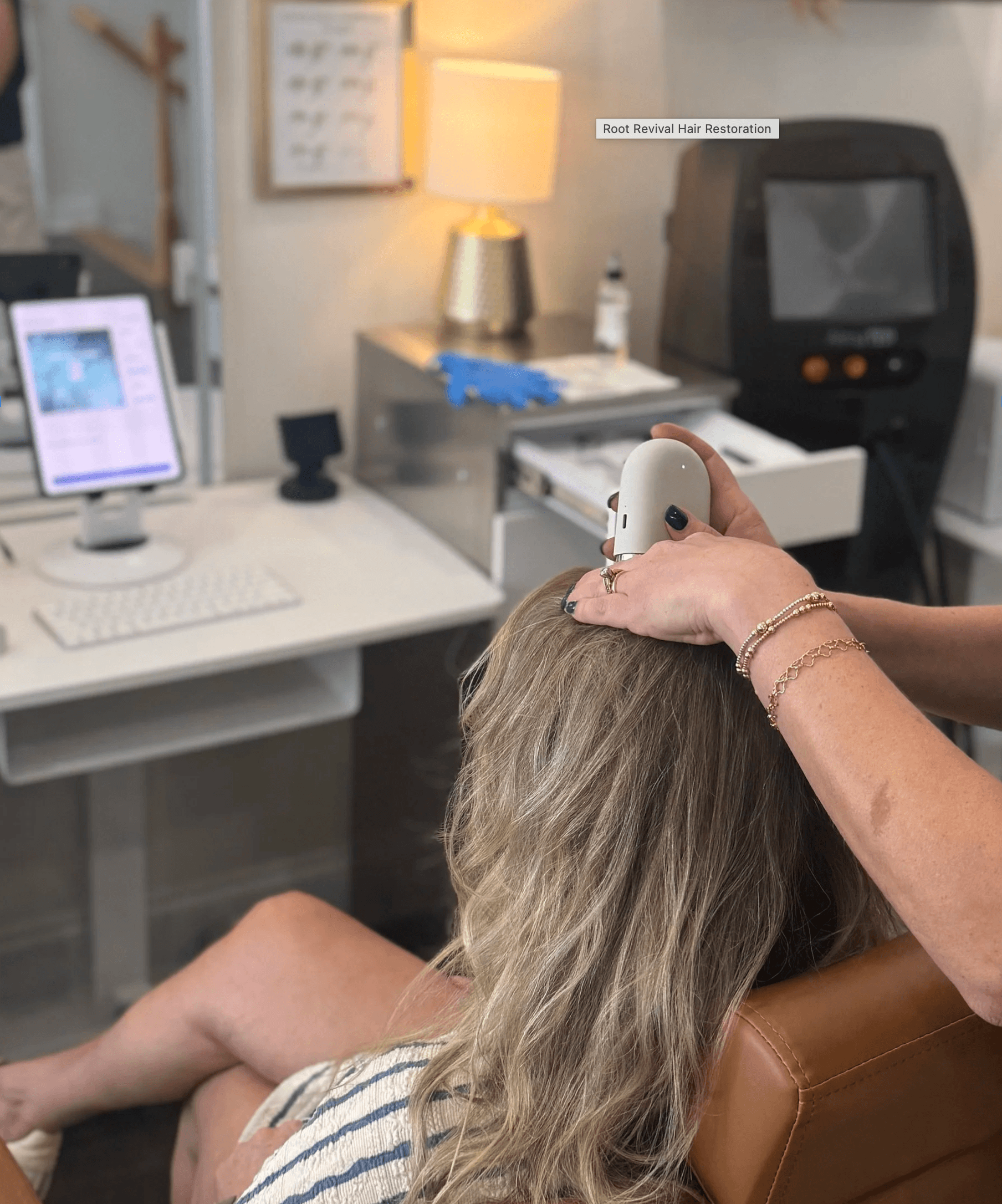
During your evaluation, we'll review your history and examine your hair and scalp to help identify patterns and determine whether additional investigation may be helpful.
Your Treatment Plan Is Built Around You
Every journey begins with a comprehensive Hair & Scalp Evaluation.
Based on our findings, recommendations may include TED Hair Restoration, Root Cold Plasma Therapy, or Low-Level Light Therapy.
When appropriate, we may also explore DNA Hair Analysis, Epigenetic Hair Analysis, nutritional guidance, bloodwork, or physician-prescribed treatments.
Not everyone needs the same approach. We'll explain your options and help you choose a plan that fits your findings, goals, and budget.
Why Early Intervention Matters
Progressive hair thinning can become more difficult to address as follicular changes advance. Early evaluation may provide more opportunities to preserve existing hair and support healthier growth.
An evaluation doesn't mean committing to treatment. It simply helps you understand your options.
Frequently Asked Questions
Is hair thinning the same as hair shedding?
No. Shedding refers to an increased number of hairs falling out, while thinning involves a reduction in hair density, hair diameter, or both. They can also occur together.
Can hair thinning improve?
Improvement is possible, depending on the type of hair loss, contributing factors, and condition of the follicles. Results and timelines vary.
Do I have to do DNA testing or nutritional testing?
Not at all. Advanced testing is optional and recommended only when it may provide useful information. Your plan may include in-office treatments, home care, medical support, or a combination based on your needs.
Every Journey Begins with a Hair & Scalp Evaluation
Understanding what's contributing to your thinning is the first step toward making informed decisions. We'll review your findings, answer your questions, and discuss personalized options to help preserve and support your hair.